1

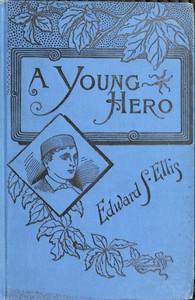
A Young Hero; Or, Fighting to Win — Reading Notes
20
7
Project Gutenberg
2019
Animals -- Juvenile fiction; Conduct of life -- Juvenile fiction; Children -- Conduct of life -- Juvenile fiction; Twins -- Juvenile fiction; Kindness -- Juvenile fiction; Students -- Juvenile fiction; Circus -- Juvenile fiction; Courage -- Juvenile fiction; Teachers -- Juvenile fiction; Hunters -- Juvenile fiction; Theft -- Juvenile fiction; Wealth -- Juvenile fiction; Widows -- Juvenile fiction; Hares -- Juvenile fiction
Readers of public-domain and historical texts
Project Gutenberg digital edition
en
Edition facts
Words: 70,942
Reading time: 309 min
Text sections: 8
Source:
Project Gutenberg record #59853
Edward S. Ellis's 1888 adventure follows Fred Sheldon, a schoolboy peacemaker in Tottenville, as he faces bullies, a circus lion escape, and a theft accusation, with excerpts showing chase scenes, moral dilemmas, and period classroom life.
The novel opens with a schoolyard fight in Tottenville, where a crowd of boys urges on two pugilists while girls threaten to tell the teacher. Into this scene steps Fred Sheldon, the peacemaker, whose intervention sets the tone for a story that repeatedly tests his courage and integrity. The excerpts show Fred fleeing from the bully Bud Heyland and his accomplice Cyrus Sutton, who fire pistols at him—one bullet grazes his ear. The chase across a meadow and over a worm-fence reveals Ellis's attention to physical detail: Fred vaults the fence like a greyhound, and the narrator notes how odd thoughts come even in stirring moments, comparing fence rails to ink lines on paper.
Later excerpts hint at a circus lion escape and a theft of silverware, but the incomplete text leaves many plot threads unresolved. Readers should expect episodic adventures centered on Fred's resourcefulness and moral choices, with a strong emphasis on action and period values.
The Peacemaker's Entrance
The first chapter, titled "The Peacemaker," immediately establishes Fred Sheldon as a boy who steps into conflict. When Sam McClay and Joe Hunt are about to fight, Fred intervenes, and the narrator notes that he is "the peacemaker"—a role that likely defines his character throughout the book. The opening lines, "A fight! A fight! Form a ring!" echo classic schoolyard confrontations, and the crowd's partisan shouts—"Black his eyes for him!"—show how Ellis uses dialogue to create a vivid, noisy setting. The girls' threat to tell Mr. McCurtis, the teacher, introduces the adult authority figures who will later appear. This scene also hints at the novel's moral framework: Fred's willingness to stop a fight contrasts with the bullying behavior of Bud Heyland, who emerges as a primary antagonist in later excerpts.
Chase and Pursuit
The excerpts include a lengthy chase sequence in which Fred flees from Bud Heyland and Cyrus Sutton. The pursuers fire pistols, and Fred feels a bullet graze his ear. Ellis describes the physical effort of running: Bud and Cyrus are "bulky" and "lumbered along," while Fred is "active and quick" and can "keep it up much longer." The chase involves strategic decisions—Fred changes course to reach woods, then swerves again when his pursuers cut him off. The narrator inserts a reflective moment: "Even in such stirring moments odd thoughts come to us," as Fred compares fence rails to crooked pen lines. This blend of action and interior observation is characteristic of Ellis's style. The scene ends with Fred vaulting a worm-fence, a feat that underscores his agility. Readers should note how the chase builds tension through incremental details—the distance, the shots, the fence—rather than through rapid plot twists.
Moral Choices and Consequences
Fred's role as a peacemaker suggests that the novel will explore moral choices. The catalog subjects include "Conduct of life," "Kindness," and "Courage," and the excerpts show Fred acting bravely under threat. However, the incomplete text leaves unclear how Fred handles the theft of silverware mentioned in the chapter list. The presence of a circus lion escape (Chapter VII: "The Lion is Loose!") adds a public danger that likely tests Fred's nerve. The excerpts also hint at class dynamics: Bud Heyland seems wealthier or more privileged, and Fred's status as a widow's son (per catalog) may drive some conflicts. Ellis does not moralize heavily in the excerpts; instead, he lets actions speak. Readers should watch for moments where Fred must choose between safety and doing what is right, and note how the author rewards or complicates those choices.
Setting and Period Details
The story is set in Tottenville, a small town with a public school, a circus, and nearby woods and meadows. The excerpts mention a "worm-fence" (a zigzag rail fence common in 19th-century America), schoolbooks, and a teacher named Mr. McCurtis. The boys carry pistols—Bud Heyland fires one during the chase—which reflects a period when firearms were more casually present. The language is formal by modern standards: characters say "Give it to him!" and "Sail in, Joe!" but the narrator uses phrases like "with might and main" and "taxed his strength and endurance to the utmost." Ellis also includes small sensory details: the fence rails look "like mingling lines of India ink against the sky." These details ground the adventure in a specific time and place. Readers interested in 1880s children's literature will find a faithful representation of its conventions, including clear moral binaries and action-driven plots.
Because the excerpts cover only the opening and a middle chase, the full arc of Fred's story remains unknown. Readers should approach the novel as a series of linked episodes rather than a tightly plotted narrative. Pay attention to how Fred's peacemaking role evolves—does he continue to intervene, or does he face situations where force is necessary? The lion escape and theft subplots promise further tests of character. Ellis's straightforward prose rewards readers who enjoy period adventure with clear heroes and villains.
Reader reflection
Before you leave, reflect on the book
Use these questions to collect your thoughts before moving on.
Your progress
0
/
10
2
Did this book hold your interest?
3
Would you recommend this book to another reader?
4
What was the reading difficulty like?
5
Could you apply anything you learned?
6
How personally connected did you feel to the book?
7
Did the story or argument move comfortably?
8
Which part made the strongest impression?
9
What is the main idea you are taking away?
10