1

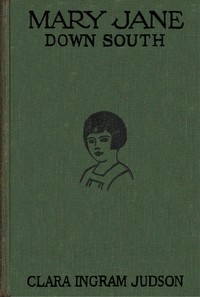
Mary Jane Down South — Key Ideas to Explore
16
6
Project Gutenberg
2015
Swimming -- Juvenile fiction; Boats and boating -- Juvenile fiction; Florida -- Juvenile fiction; Beaches -- Juvenile fiction; Oklawaha River (Fla.) -- Description and travel -- Juvenile fiction; Ostrich farms -- Juvenile fiction
Readers of public-domain and historical texts
Project Gutenberg digital edition
en
Edition facts
Words: 35,185
Reading time: 153 min
Text sections: 24
Source:
Project Gutenberg record #50198
This editorial note examines how Clara Ingram Judson structures Mary Jane's Florida journey through episodic chapters, recurring water imagery, and movement between train, boat, and beach scenes, using excerpts to trace the interplay of adventure and everyday observation.
Editorial Edition Score
4.8/5
★★★★★
★★★★★
Calculated from edition completeness, EPUB availability, text structure and catalogue metadata. Not a user rating.
Edition quality
Clara Ingram Judson builds Mary Jane Down South around a series of discrete episodes, each chapter titled like a mini-adventure — “All Aboard for Florida!”, “At the Ostrich Farm”, “The Boat’s A-Fire!” — yet the narrative is held together by a steady rhythm of travel and arrival. The opening chapter establishes a compressed timeline: the week before departure feels “unusually short” to Mary Jane, a five-year-old kindergartner, and Judson uses this subjective perception to signal that the journey will be measured by experiences rather than clock hours. The structure moves from train to boat to beach, with each new setting introduced by a fresh chapter heading that promises a distinct event.
Episodic Chapters as Travel Log
The table of contents reads like a diary of stops: Birmingham, an ostrich farm, a boat fire, a Spanish quarter, a day on the beach, a storm at sea, and a ride on the Ocklawaha River. Each chapter is self-contained, often beginning with a departure or arrival. For instance, “All Aboard for Florida!” opens with Mary Jane’s sense of time distortion, while “At Sea in a Storm” starts with a mystery about a picnic basket. This episodic structure mirrors the family’s actual itinerary and allows Judson to shift scenes without needing a continuous plot. The chapters are short — the book has 24 text sections for 35,185 words — so each functions as a vignette. The movement is always forward, from one location to the next, with little backward glance.
Water as a Recurring Element
Water appears repeatedly: the ocean swim, the boat fire, the storm at sea, wading for crawdads, and the Ocklawaha River trip. Even on land, the beach is a constant presence. In the shell-collecting scene, the family sorts shells on the sand, discarding imperfect ones back into the ocean. The taxi rides “over the beach, across the bridge and down the river street,” blending sand, bridge, and river into a single journey. Water is both a setting and a source of mild peril — the boat fire and the storm create tension — but it is also a place of play and discovery. Judson uses water to link the episodes: the family moves from one body of water to another, from the Atlantic to the river, reinforcing the sense of a southward, tropical progression.
Movement Between Scenes
Transitions are often abrupt, marked by a new chapter or a simple line like “Later when they had had their good luncheon.” The narrative jumps from the beach to the hotel porch, from a picnic to a storm, without dwelling on the in-between. This technique keeps the pace brisk and matches a child’s attention span. In the excerpt, Mary Jane goes from shell sorting to a taxi ride to finding her friend Ellen on the porch — all in a few paragraphs. The movement is not just geographical but social: new characters appear suddenly, like Ellen and her mother, and plans are made on the spot. Judson does not explain how the family gets from one town to another; she focuses on the moments of arrival and activity, leaving travel logistics implied.
The Role of the Illustrations
The three illustrations listed in the front matter — the street scene, the river-view porch, and the girls picking fruit — are placed at key moments: the frontispiece shows the turn south, another captures the river view, and a third shows the orchard. These images punctuate the text, offering visual anchors for the settings. The captions are descriptive: “This is the living room and here’s the dining room and here, where you can see the river bed, is the porch.” They do not depict action but rather place, reinforcing the book’s emphasis on location. The illustrations by Frances White likely helped young readers visualize the Florida landscape — the river, the beach, the Spanish-style architecture — which the text describes only briefly.
Readers may find it useful to note how each chapter can stand alone, making the book suitable for reading in short sessions. The episodic structure, water imagery, and rapid scene changes reflect a travelogue designed for a young audience. Pay attention to the way Judson uses Mary Jane’s perspective — her wonder at the “very, very short week” and her delight in shells — to filter the adult world of planning and packing. The book rewards a focus on setting and movement rather than character development or plot.
Reader reflection
Your personal reading reflection
Build a private reading journal entry for this title.
Your progress
0
/
10
2
How much did you enjoy the reading experience?
3
Would you encourage someone else to read it?
4
Did the language feel accessible?
5
Is this a title worth rereading?
6
Did the book offer a fresh perspective?
7
Which part made the strongest impression?
8
Did you relate to its people, ideas, or situations?
9
What is the main idea you are taking away?
10