1

The Family on Wheels — Reading Companion
4
0
Project Gutenberg
2017
Orphans -- Juvenile fiction; Siblings -- Juvenile fiction; Circus performers -- Juvenile fiction; Children -- Juvenile fiction; Circus animals -- Juvenile fiction
Readers of public-domain and historical texts
Project Gutenberg digital edition
en
Edition facts
Words: 46,194
Reading time: 201 min
Text sections: 25
Source:
Project Gutenberg record #55891
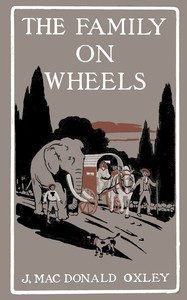
This editorial note examines how J. MacDonald Oxley's 'The Family on Wheels' uses marching rhythms, circus settings, and the elephant Nalla to structure a story of orphan siblings navigating performance and peril.
Editorial Edition Score
4.8/5
★★★★★
★★★★★
Calculated from edition completeness, EPUB availability, text structure and catalogue metadata. Not a user rating.
Edition quality
The opening scene of The Family on Wheels establishes a pattern of movement that governs the entire narrative. A dozen boys march out of Morainville to the cadence of “One! two! right! left!”—a rhythm that reappears whenever the Tamby family travels, performs, or faces crisis. The author, J. MacDonald Oxley, adapts a French original into an English children’s adventure that relies on repeated physical actions—drilling, juggling, animal tricks—to advance plot and define character. The elephant Nalla, introduced later, becomes the most mobile element, stampeding, rescuing, and pranking in ways that shift the story’s momentum. This note traces three structural devices: the marching motif, the circus performance as narrative engine, and the strategic placement of Nalla’s interventions.
Marching as a Structural Beat
The first chapter’s drill scene is not mere color. The counting—“One! two! right! left!”—recurs at key transitions, linking the children’s play to the family’s later disciplined routines. When Cæsar organizes his siblings for a performance, the same verbal cue could easily be imagined. The marching also establishes a spatial logic: the troop halts at a hilltop with spruce trees, a setting that anticipates the open-air fairgrounds and roadside stops that structure the Tambys’ journey. Oxley uses the march to mark beginnings and endings of episodes, creating a pulse that readers can follow even when the scene shifts abruptly.
The Performance as Narrative Engine
Each public show—whether at the Beaulieu fair or a village square—serves as both plot device and character test. The excerpts show that a successful performance yields exactly 500 francs, a sum that Cæsar calls “a small fortune.” But the counting of chairs, the pricing of seats (ten sous for chairs, five for planks), and the careful division of profits reveal that economic survival drives the family’s decisions. Nadine’s singing, Cæsar’s juggling, Vigilant’s antics, and Nalla’s intelligence are not just entertainments; they are the family’s only means of winter support. The threat of theft—Nadine’s fear of a face at the window—turns the profit into a liability, linking performance directly to danger.
Nalla as a Mobile Plot Device
The elephant Nalla is the most dynamic element in the story’s structure. The chapter titles alone trace her arc: “The Stampeding of Nalla,” “Nalla Recovered,” “Nalla to the Rescue,” “Nalla Plays Pranks.” Each incident shifts the family’s location or fortune. When Nalla is stampeded by students, the apparent misfortune becomes an “admirable advertisement.” When she is separated, the family must recover her. When she is on guard, she replaces human vigilance. Oxley uses Nalla’s physical size and intelligence to create sudden changes in setting—from roadside to circus lot to magistrate’s court—without needing elaborate transitions. The elephant’s movements effectively redraw the map of the story.
The Rhythm of Reversal
Oxley repeatedly pairs misfortune with benefit. The stampede that could ruin the family instead draws a crowd. The black-bearded man’s trick backfires, increasing sympathy. Even Nadine’s fear of robbery leads to Cæsar’s offer to keep guard, reinforcing their mutual dependence. This pattern of reversal gives the narrative a predictable but satisfying rhythm: each setback contains the seed of a better outcome. The structure relies on this oscillation rather than on linear suspense. Readers familiar with adventure serials will recognize the formula, but Oxley varies it by making the children’s own resourcefulness—not adult rescue—the agent of reversal. Cæsar’s calm response to Nadine’s alarm, for instance, shows that the family’s cohesion is their real protection.
Readers will find that the book’s pleasures lie less in plot surprises than in the steady, almost musical alternation of travel and performance, threat and recovery. Pay attention to the way Oxley uses the elephant Nalla as a hinge between scenes: her entrances and exits often mark the turn from trouble to triumph. The family’s name—Tamby—is itself a kind of rhythm, and the story moves to its beat.
Reader reflection
Before you leave, reflect on the book
Use these questions to collect your thoughts before moving on.
Your progress
0
/
10
2
How much did you enjoy the reading experience?
3
How likely are you to recommend this book?
4
How easy was the book to follow?
5
How clear did the writing feel?
6
How would you rate its originality?
7
What was its emotional impact?
8
Could you see yourself revisiting this book?
9
What changed or sharpened your thinking?
10