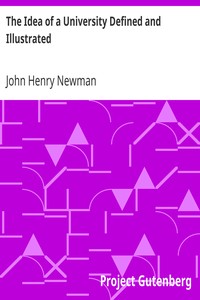
The Idea of a University Defined and Illustrated by John Henry Newman
Don't let the formal title fool you. This book is a collection of lectures Newman gave while setting up a new Catholic university in Ireland. There's no fictional plot, but there is a clear story: it's the story of an idea under threat.
The Story
Newman is watching the world change. The Industrial Revolution is in full swing, and people are starting to see education as a direct path to a specific job. He sees universities potentially shrinking, becoming technical schools. His lectures are his counterattack. He lays out a bold vision: a university should be a community dedicated to 'liberal knowledge'—learning that frees your mind. He argues that by studying many subjects together (what we'd call a liberal arts education), you don't just gain facts. You develop good judgment, a balanced perspective, and the ability to see how different ideas connect. For him, this is the true purpose of higher learning.
Why You Should Read It
Reading this feels like having a conversation with a fiercely intelligent friend who's worried about the soul of education. His passion is contagious. When he describes the ideal graduate—not a walking encyclopedia, but a person with a 'philosophical habit of mind'—it’s inspiring. It makes you look back on your own education and ask what you really took from it. The most striking part is how current it feels. Swap 'railroads' for 'AI' and his warnings about reducing education to mere utility sound like they were written last week. It gives you a powerful vocabulary to discuss what we might be losing when we only focus on the bottom line.
Final Verdict
This is a book for the curious. It's perfect for current students feeling adrift in their majors, for graduates wondering if it was all worth it, and for anyone who believes learning should be about more than a paycheck. It’s also a great read for professors and administrators. Yes, some passages are dense (it's the 1850s, after all), but the core argument is crystal clear and deeply human. If you want to think more deeply about why we learn, this classic is your starting point.
This text is dedicated to the public domain. Thank you for supporting open literature.
Kevin Thompson
2 years agoI had low expectations initially, however it manages to explain difficult concepts in plain English. I will read more from this author.
Mason Lopez
1 year agoPerfect.
Michelle Lopez
1 year agoI started reading out of curiosity and the flow of the text seems very fluid. I will read more from this author.
Kimberly Ramirez
3 months agoFinally a version with clear text and no errors.

Ava Rodriguez
1 year agoI was skeptical at first, but the content flows smoothly from one chapter to the next. Exactly what I needed.