1

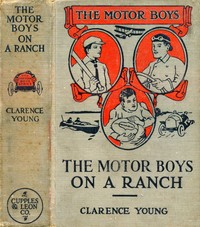
The Motor Boys on a Ranch; or, Ned, Bob and Jerry Among the Cowboys — A Closer Reading
5
0
Project Gutenberg
2016
Mystery and detective stories; Automobiles -- Juvenile fiction; Ranches -- Juvenile fiction; Cowboys -- Juvenile fiction; Cattle stealing -- Juvenile fiction
Readers of public-domain and historical texts
Project Gutenberg digital edition
en
Edition facts
Words: 59,095
Reading time: 257 min
Text sections: 31
Source:
Project Gutenberg record #52153
This editorial note examines how the opening, middle, and later excerpts of 'The Motor Boys on a Ranch' guide a first reading, focusing on the boys' character dynamics, the role of the airship, and the tension with the cowboy Hinkee Dee.
The story opens with Ned Slade's grumbling complaint—"Might have known it would turn out this way if we let him manage things"—immediately establishing a pattern of banter and blame among the three friends. The dialogue reveals distinct personalities: Ned is quick to criticize, Jerry is defensive, and Bob is the one who "said he would see that everything was all right." This conversational opening, set on a drifting motor boat, signals that the boys' relationships and their tendency to bicker will be central to the narrative. The excerpt also introduces a recurring structural device: a problem caused by one of the boys that the group must solve together.
Character Dynamics Through Dialogue
The opening chapter relies heavily on dialogue to define the three protagonists. Ned's sarcastic remark about Bob having "compound astigmatism in both blinkers" shows a teasing, affectionate tone. Jerry's response—"Why, Bob said he would see that everything was all right"—shifts blame but also suggests trust in Bob's intentions. This pattern of accusation and defense recurs throughout the excerpts. Later, when discussing the airship, Jerry, Ned, and Bob speak in short, collaborative exchanges: "Well, we'll get him yet," declares Jerry, and Ned replies, "I say! let's get busy." Their speech is direct and action-oriented, reflecting a group that argues but ultimately works together. The reader can expect the plot to advance through these verbal interactions rather than lengthy description.
The Airship as a Social Catalyst
The middle excerpt shows the airship transforming the boys' status at Square Z Ranch. The cowboys, initially skeptical, become curious and respectful. Professor Snodgrass gains esteem by flying, and the boys use the craft to "gain them more consideration." However, the airship also creates division: the cowboy Hinkee Dee remains "plain mean and insulting." The machine serves as a test of character—those who embrace it (like Gimp and the Parson) become allies, while Hinkee Dee's hostility deepens. The boys' decision to switch from airship to ponies for their next investigation marks a strategic shift, suggesting that the airship's role is to establish credibility rather than solve the mystery directly.
Tension with Hinkee Dee and the Mystery
Hinkee Dee emerges as a key antagonist in the later excerpts. Unlike the other cowboys, he is "not at all friendly" and his behavior is described as "just plain mean and insulting." The boys speculate that he might be connected to the cattle thieves: "Is he afraid we'll discover the cattle thieves?" asks Bob. Ned notes that Hinkee Dee "wants to solve the mystery himself" but "hasn't done anything that I can see—except talk." This ambiguity keeps the reader guessing. The foreman's comment that the boys have "kept 'em away since you came, except for that one raid" adds a layer of tension: the rustlers are still active, and Hinkee Dee's motives remain unclear. The excerpts do not reveal whether he is a villain or merely a difficult character, leaving the mystery unresolved.
The Wrong Pony: A Turning Point
Chapter XVII introduces a critical incident: Jerry takes the wrong pony, Go Some, a horse known for turning wild after being ridden. The foreman's reaction—"By stirrup!"—and Gimp's rush to intervene create a moment of high stakes. The pony's name, "Go Some," and its reputation as an "imp of Satan" suggest that this mistake will have serious consequences. The excerpt cuts off before the outcome, but the setup is clear: Jerry's error, born of inexperience with horses, will likely lead to a dangerous situation. This event contrasts with the boys' earlier confidence in the airship, highlighting their vulnerability in the unfamiliar ranch environment. The reader is left to wonder whether the boys' resourcefulness will extend to handling a wild horse.
The excerpts reveal a story built on dialogue, character friction, and incremental challenges rather than rapid plot advancement. The airship serves as a tool for social maneuvering, while the mystery of the cattle thieves remains in the background. Readers should pay attention to how the boys' arguments and decisions shape their progress, and note that the most dramatic moments—like the wrong pony—arise from small, believable mistakes. The narrative rewards patience and attention to the characters' evolving relationships with the cowboys and the landscape.
Reader reflection
Before you leave, reflect on the book
Use these questions to collect your thoughts before moving on.
Your progress
0
/
10
2
Did this book hold your interest?
3
How likely are you to recommend this book?
4
How much effort did this book require?
5
How personally connected did you feel to the book?
6
How did the pace of the book feel?
7
How would you rate its originality?
8
How clear did the writing feel?
9
What changed or sharpened your thinking?
10