
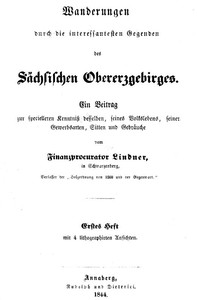
Wanderungen durch die interessantesten Gegenden des Sächsischen Obererzgebirges…
Okay, let's be clear upfront: this isn't a page-turning thriller. Wanderungen durch die interessantesten Gegenden des Sächsischen Obererzgebirges (which translates to 'Walks through the most interesting areas of the Saxon Upper Ore Mountains') is exactly what it sounds like—a detailed travelogue from the early 19th century. Published in the 1830s, author Johann Traugott Lindner acts as your guide. He methodically describes routes, towns, and natural landmarks. He points out a charming church here, a scenic overlook there, and the history of a mining town over the next hill.
The Story
There's no traditional plot. Instead, the 'story' is the journey itself. Lindner structures the book as a series of walks. You start in one town, follow his directions and observations for miles, and end in another. Along the way, he doesn't just note distances. He tells you about the people: their trades (mining, forestry, lace-making), their local festivals, and the old tales they tell about the hills. He describes the forests, rivers, and rocks with the eye of someone who truly knows them. The book feels like a long, thoughtful letter from a well-informed friend who wants you to see and appreciate his home as deeply as he does.
Why You Should Read It
This book got under my skin because of its quiet urgency. Lindner wasn't writing for tourists in our sense. He was preserving a snapshot. The Industrial Revolution was beginning to transform Europe, and ways of life that had lasted centuries were starting to change. When he describes a mining technique or a village custom, he's often saying, 'This is how it's done,' with the unspoken hint of, 'for now.' Reading it feels like peering through a window into a specific moment. You get geography, sure, but also economics, folklore, and everyday life. It's history written from the ground level, not by a general or a king, but by a curious observer walking the paths.
Final Verdict
This is a niche read, but a rewarding one. It's perfect for history buffs, armchair travelers, or anyone with roots in the Erzgebirge region who wants a deeply authentic connection to the past. It's also great if you love primary sources—the raw, unfiltered material of history. You need some patience, as the detail can be dense. But if you let it, Lindner's book will transport you. You'll put it down feeling like you've just returned from a long, enlightening walk in 1830s Germany, with the scent of pine needles and the sound of a hammer on ore still lingering in your mind.
This work has been identified as being free of known copyright restrictions. Knowledge should be free and accessible.
Charles Sanchez
1 year agoMy professor recommended this, and I see why.
Sarah Brown
1 year agoAs someone who reads a lot, the plot twists are genuinely surprising. I will read more from this author.
William Lewis
9 months agoHonestly, the plot twists are genuinely surprising. Exceeded all my expectations.
Donald White
7 months agoHelped me clear up some confusion on the topic.






Sarah Hernandez
5 months agoNot bad at all.