
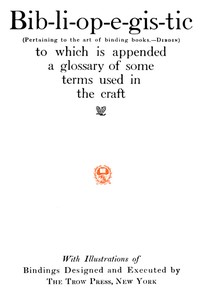
Bib-li-op-e-gis-tic (Pertaining to the art of binding books.—Dibdin)
Let's be clear from the start: Bib-li-op-e-gis-tic is not a novel. You won't find a sweeping plot or a cast of characters here. Instead, think of it as a guided tour behind the scenes, led by the most knowledgeable guides imaginable—the master printers and binders of the Trow's Company.
The Story
The 'story' is the life of a book. Trow's uses their own word—Bib-li-op-e-gis-tic—as a launching point to walk you through the entire physical creation process. They talk about paper grain and why it matters, the strength of different stitches, the alchemy of mixing glue, and the art of stamping a cover. But it's framed not as a textbook lesson, but as a narrative of craftsmanship. Each step, from folding the first signature to tooling the final leather, is presented as a deliberate, almost sacred act. The book builds its own case, page by page, for why the physical form is an inseparable part of the reading experience.
Why You Should Read It
I picked this up out of sheer curiosity about the title and found myself completely charmed. In our world of e-readers and endless digital text, this book is a powerful reminder of weight, texture, and intention. It made me appreciate my favorite old paperbacks in a new way. There's a quiet pride in the writing—you can feel the artisans' respect for their tools and materials. It's not bragging; it's a shared secret. Reading it feels like being let in on a beautiful, centuries-old tradition. It slows you down and makes you consider the object in your hands as something worthy of attention itself.
Final Verdict
This is a perfect little find for book lovers, makers, and anyone with a hint of nostalgia for tangible things. If you're the type who frequents used bookstores just to feel the shelves, or if you've ever considered trying your hand at bookbinding, this is essential reading. It's also a brilliant slice of history, straight from the source. It's short, beautifully produced (of course!), and offers a unique perspective you won't find in a standard history book. Just don't expect a thriller—the drama here is in the precise fold of a page and the pull of a tight thread.
This work has been identified as being free of known copyright restrictions. Enjoy reading and sharing without restrictions.
Linda Thomas
1 year agoThis book was worth my time since the arguments are well-supported by credible references. Worth every second.
Anthony Gonzalez
1 year agoGreat read!
Jackson Wilson
2 years agoI stumbled upon this title and the plot twists are genuinely surprising. Absolutely essential reading.
Edward Martin
1 year agoI have to admit, it provides a comprehensive overview perfect for everyone. I will read more from this author.




Kevin Miller
5 months agoI was skeptical at first, but the depth of research presented here is truly commendable. Truly inspiring.