
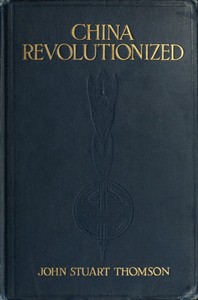
China Revolutionized by John Stuart Thomson
John Stuart Thomson wasn't a historian or a diplomat. He was an engineer hired to help modernize China's infrastructure right as the ancient imperial system collapsed. China Revolutionized is his firsthand report from the trenches of that change.
The Story
The book doesn't have a single plot, but it follows Thomson's journey through a nation being ripped apart and rebuilt. He arrived with optimism, ready to install telephones and power plants. What he found was a society in violent transition. He describes the revolution not as a neat political event, but as a daily reality of banditry, shifting loyalties, and desperate poverty. He takes us from the treaty ports, buzzing with foreign business, to rural villages untouched for centuries. We see his frustration with corrupt officials, his admiration for the resilience of ordinary people, and his growing concern about China's future as foreign powers circle. It's the story of an idealistic man confronting the brutal, complicated birth of a new world.
Why You Should Read It
This book is fascinating because of its perspective. Thomson has no agenda to make China look good or bad for Western readers. He's just telling you what he sees, and he's often brutally honest. His writing is packed with vivid details—the smell of a marketplace, the tension in a city under martial law, the arguments with local contractors. You get a real sense of the overwhelming scale of China's problems and the sheer audacity of trying to 'modernize' a civilization that old overnight. It also makes you think about the price of progress and who gets to define it. His views are very much of his time (and can be paternalistic), which in itself is a compelling part of the record.
Final Verdict
Perfect for readers who love primary sources and want to feel history happening. It's not a balanced, academic overview; it's one man's passionate, biased, and incredibly detailed diary of a revolution. If you enjoy travelogues, historical eyewitness accounts, or books that let you see the world through a very specific, opinionated pair of eyes, you'll be captivated. Just be ready for a viewpoint that is unapologetically early-20th-century American. It's a challenging, absorbing, and unique look at a pivotal moment most of us only know from textbooks.
Legal analysis indicates this work is in the public domain. You do not need permission to reproduce this work.
Betty Wright
3 months agoGreat reference material for my coursework.
Jessica Torres
1 year agoHonestly, it provides a comprehensive overview perfect for everyone. A valuable addition to my collection.
Liam Flores
1 year agoThe layout is very easy on the eyes.