
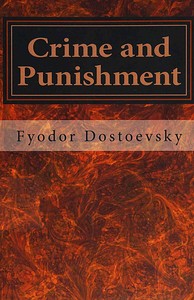
Crime and Punishment by Fyodor Dostoyevsky
Let's be honest, the title tells you exactly what this book is about. But the genius is in how Dostoyevsky unpacks it.
The Story
We meet Rodion Raskolnikov, living in a tiny, dirty room in St. Petersburg. He's poor, proud, and has dropped out of university. He cooks up a theory that 'extraordinary' people, like Napoleon, have the right to step over moral laws for a greater purpose. To test his own greatness, he decides to kill Alyona Ivanovna, a nasty old pawnbroker he sees as a 'louse' on society. The act is messy, and he's forced to kill her innocent sister, Lizaveta, too. He steals some trinkets but barely uses the money.
The rest of the story is the 'punishment.' It's not about a court trial, but the trial inside Raskolnikov's head. He gets physically sick with guilt and paranoia. He's drawn into a cat-and-mouse game with the clever investigator Porfiry, who seems to know everything just by watching him squirm. Meanwhile, his life intersects with other desperate souls: the kind-hearted prostitute Sonya, who becomes his confessor, and his loving sister Dunya, whose own sacrifices haunt him. The tension builds not from whether he'll get caught, but from whether his crumbling mind will drive him to confess or destroy himself.
Why You Should Read It
This book gets inside your head. Raskolnikov is frustrating, arrogant, and sometimes hard to like, but you feel every jolt of his panic and isolation. Dostoyevsky doesn't just tell you he's guilty; he makes you feel the suffocating weight of a secret. The side characters aren't just background—they're mirrors reflecting different parts of his soul and the poverty-stricken world around him. Sonya's quiet faith contrasts sharply with Raskolnikov's cold logic, and their scenes together are electric.
It's also surprisingly fast-paced for a classic. Large sections are intense conversations that read like psychological showdowns. You're not just reading about ideas; you're watching a man's entire philosophy of life shatter against the reality of what he's done.
Final Verdict
Perfect for anyone who loves a deep character study or a mental puzzle. If you like shows and books that explore the 'why' behind a crime more than the 'how,' this is your masterpiece. It's for readers who aren't afraid of messy, complicated protagonists and who enjoy wrestling with big questions about morality, guilt, and redemption. Give yourself time with it—the first 100 pages are a slow burn into a raging fire. It's a book that sticks with you long after you've turned the last page.
This content is free to share and distribute. Enjoy reading and sharing without restrictions.
Deborah Clark
2 months agoHelped me clear up some confusion on the topic.
Margaret Davis
1 year agoSurprisingly enough, the arguments are well-supported by credible references. Thanks for sharing this review.
Lisa Brown
1 year agoCitation worthy content.
Emma Rodriguez
11 months agoComprehensive and well-researched.


Sandra Lewis
8 months agoHaving read this twice, the pacing is just right, keeping you engaged. Highly recommended.