
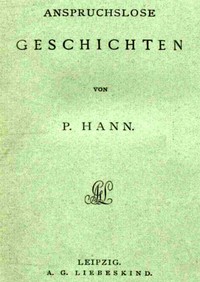
Anspruchslose Geschichten by Pauline Hann
Let's be clear from the start: you won't find a single swordfight or dramatic chase in these pages. 'Anspruchslose Geschichten' is exactly what its title promises—a collection of modest, everyday tales. Published in the late 1800s, it offers a window into the lives of regular German folk, from young women navigating the complexities of love and marriage to families dealing with the pressures of social standing and financial security.
The Story
There isn't one overarching plot. Instead, Pauline Hann gives us a series of vignettes and short stories. We might follow a daughter trying to please her parents with a suitable match, a craftsman worrying about his reputation, or a family gathering where unspoken tensions simmer just below the surface. The drama is in the subtle glances, the carefully chosen words, and the weight of social expectation. The stories are set in a world of precise manners and clear hierarchies, where a slight misstep could cause gossip for weeks. Hann doesn't judge this world; she simply shows it to us, with a keen eye for the small moments that reveal character.
Why You Should Read It
I fell for this book precisely because it feels so real and unadorned. Hann writes with a quiet empathy that makes her characters instantly familiar, even across a century and a half. Reading it, you get a sense of the rhythm of daily life—the worries, the hopes, the small triumphs that history books usually ignore. It’s a masterclass in observing human nature. The themes are universal: the desire for love, the fear of disappointment, the pull of duty versus personal happiness. You’ll recognize these people. They’re your neighbors, your relatives, seen through the lens of gaslight and horse-drawn carriages instead of smartphones.
Final Verdict
This book is a hidden gem for a specific kind of reader. It’s perfect for historical fiction fans who crave authenticity over swashbuckling adventure, and for anyone who loves character studies. If you enjoyed the domestic details in Jane Austen or the social observations in writers like Theodor Fontane, you’ll feel right at home here. It’s also a fantastic read for writers, as a lesson in how to build a world through intimate, small-scale storytelling. Fair warning: it’s a slow, gentle read. Don’t rush it. Savor each story like a cup of tea, and let yourself be transported. You might just find that these 'unassuming' tales leave a lasting impression.
This text is dedicated to the public domain. You do not need permission to reproduce this work.
Michael Walker
3 months agoClear and concise.
Robert Lewis
2 months agoSurprisingly enough, it manages to explain difficult concepts in plain English. Truly inspiring.
Emily Nguyen
9 months agoAfter finishing this book, the author's voice is distinct and makes complex topics easy to digest. Definitely a 5-star read.
Emily Perez
2 years agoGreat reference material for my coursework.





Melissa Sanchez
1 year agoComprehensive and well-researched.